现期刊物2026

卷册: 16, 期号: 1

Jan

5

生物物理学

用于生物样品成像的小型施利伦光学装置

A Compact Schlieren Optics Device for Imaging Biological Samples

用于生物样品成像的小型施利伦光学装置

YT Yimeng Tong
JT Jay X. Tang
329 Views
Jan 5, 2026
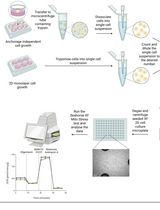
Conventional Schlieren optics equipment typically operates on a large optical table, which is inconvenient for imaging small samples or thin layers of transparent materials. We describe an imaging device based on Schlieren optics, aided by a slight shift in light reflected from two surfaces. The device is designed to place the sample between a thick concave mirror and a camera next to a point-light source located at the spherical origin of the concave mirror. The compact device is portable and convenient. It is similarly capable of sensitively detecting patterns in gaseous or liquid media created by a density gradient when the optical effect is too subtle to be detectable by regular cameras and scanners. The new device is particularly suitable for detecting translucent samples, including thin fluid films on the order of micrometers, tissue slices, and other biological samples. We show two examples of how our device can be applied to imaging biological samples. The first compares images acquired using several techniques of a bacterial swarm spread over an agar plate; the second is a set of images of human cells grown on a tissue culture plate.
SiMPull-POP:利用单分子光漂白技术定量分析膜蛋白的组装

SiMPull-POP: Quantification of Membrane Protein Assembly via Single Molecule Photobleaching

SiMPull-POP:利用单分子光漂白技术定量分析膜蛋白的组装

RS Ryan J. Schuck
AW Alyssa E. Ward
FB Francisco N. Barrera
RL Rajan Lamichhane
169 Views
Jan 5, 2026
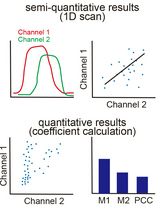
Traditional methods for studying protein–protein interactions often lack the resolution to quantitatively distinguish distinct oligomeric states, particularly for membrane proteins within their native lipid environments. To address this limitation, we developed SiMPull-POP (single-molecule pull-down polymeric nanodisc photobleaching), a single-molecule technique designed to quantify membrane protein oligomerization with high sensitivity and in a near-native context. The goal of SiMPull-POP is to enable precise, quantitative analysis of membrane protein assembly by preserving native lipid interactions using diisobutylene maleic acid (DIBMA) to form nanodiscs. Unlike ensemble methods such as co-immunoprecipitation or FRET, which average out heterogeneous populations, SiMPull-POP uses photobleaching to resolve monomeric, dimeric, and higher-order oligomeric states at the single-molecule level. We validated SiMPull-POP using several model systems. A truncated, single-pass transmembrane protein (Omp25) appeared primarily monomeric, while a membrane-tethered FKBP protein exhibited ligand-dependent dimerization upon addition of the AP ligand. Applying SiMPull-POP to EphA2, a receptor tyrosine kinase, we found it to be mostly monomeric in the absence of its ligand, Ephrin-A1, and shifting toward higher-order oligomers upon ligand binding. To explore factors influencing ligand-independent assembly, we modulated membrane cholesterol content. Reducing cholesterol induced spontaneous EphA2 oligomerization, indicating that cholesterol suppresses receptor self-association. Overall, SiMPull-POP offers significant advantages over conventional techniques by enabling quantitative, single-molecule resolution of membrane protein complexes in a native-like environment. This approach provides critical insights into how membrane properties and external stimuli regulate protein assembly, supporting broader efforts to understand membrane protein function in both normal and disease states.

细胞生物学

利用基于分裂mNeonGreen的SAIYAN系统通过荧光信号检测内源性小GTP酶的激活

Detecting the Activation of Endogenous Small GTPases via Fluorescent Signals Utilizing a Split mNeonGreen: Small GTPase ActIvitY ANalyzing (SAIYAN) System

利用基于分裂mNeonGreen的SAIYAN系统通过荧光信号检测内源性小GTP酶的激活

MM Miharu Maeda
KS Kota Saito
322 Views
Jan 5, 2026
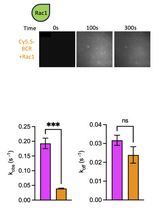
Small GTPases function as molecular switches in cells, and their activation triggers diverse cellular responses depending on the GTPase type. Therefore, visualizing small GTPase activation in living cells is crucial because their activity is tightly regulated in space and time, and this spatiotemporal pattern of activation often determines their specific cellular functions. Various biosensors, such as relocation-based sensors and fluorescence resonance energy transfer (FRET)-based sensors, have been developed. However, these methods rely on interactions between activated GTPases and their downstream effectors, which limits their applicability for detecting activation of GTPases with unknown or atypical effectors. Recently, we developed a novel method utilizing split fluorescence technology to detect membrane recruitment of small GTPases upon activation, designated the Small GTPase ActIvitY ANalyzing (SAIYAN) system. This approach offers a new strategy for monitoring small GTPase activation based on membrane association and is potentially applicable to a wide range of small GTPases, including those with uncharacterized effectors.

微生物学

FLARE:一种基于流式细胞术检测HSV-1核出壳的荧光分析方法

FLARE: A Flow Cytometry–Based Fluorescent Assay for Measuring HSV-1 Nuclear Egress

FLARE:一种基于流式细胞术检测HSV-1核出壳的荧光分析方法

BD Bing Dai
LP Lucas Polack
SM Samantha Moores
Ariana C. Calderon-Zavala Ariana C. Calderon-Zavala
Ekaterina E. Heldwein Ekaterina E. Heldwein
385 Views
Jan 5, 2026
During herpesvirus replication, capsids are assembled inside the nucleus and translocated into the cytosol by a non-canonical nucleocytoplasmic export process termed nuclear egress. Traditional methods of measuring nuclear egress rely on imaging-based technologies such as confocal and electron microscopy. These techniques are labor-intensive, limited by the number of cells that can be examined, and may not accurately represent the entire population, generating a potential bias during data interpretation. To overcome these problems, we have developed a flow cytometry–based method to measure HSV-1 nuclear egress that we termed FLARE (FLow cytometry–based Assay of nucleaR Egress). This assay uses a double fluorescent reporter system, utilizing HSV-1-tdTomato to identify infected cells and an Alexa Fluor-488-conjugated, capsid-specific antibody to detect cytosolic capsids, thereby distinguishing infected cells with nuclear egress from those without it. This assay provides more quantitative results than traditional methods, enables large-scale high throughput, and can be adapted for use with other herpesviruses.
利用手动投入冷冻法对病毒感染细胞进行可重复制备以用于冷冻聚焦离子束/电子断层扫描

Reproducible Sample Preparation of Virus-Infected Cells for Cryo-FIB/ET Using Manual Plunge Freezing

利用手动投入冷冻法对病毒感染细胞进行可重复制备以用于冷冻聚焦离子束/电子断层扫描

NL Nathalie R. Lavoie
Ekaterina E. Heldwein Ekaterina E. Heldwein
115 Views
Jan 5, 2026
Most viruses extensively remodel their host cells to establish productive infection. Visualization of virus-induced cellular remodeling by electron microscopy (EM) has been revolutionized in recent years by advances in cryo-focused ion beam (cryo-FIB) milling paired with cryo-electron tomography (cryo-ET). As cryo-FIB/ET becomes more widely available, there is a need for beginner-friendly guides to optimize the preparation of virus-infected mammalian cells on EM grids. Here, we provide an in-house protocol for new users for preparing samples of cells infected with herpes simplex virus 1 (HSV-1) for cryo-FIB/ET. This protocol guides users in how to seed infected cells onto grids, blot, and plunge-freeze grids using basic, manual equipment. It also provides tips on how to screen and prioritize grids for efficient milling and data collection.
利用新型CRISPR/Cas9系统构建粗糙脉孢菌的功能缺失突变体

Creating Loss-of-Function Mutants of Neurospora crassa Using a Novel CRISPR/Cas9 System

利用新型CRISPR/Cas9系统构建粗糙脉孢菌的功能缺失突变体

SG Stefanie Grüttner
64 Views
Jan 5, 2026
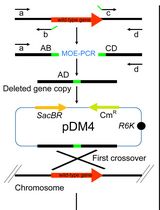
Since its introduction, the CRISPR/Cas9 system has been used in many organisms for precise and rapid genome editing, as well as for editing multiple genes at once. This targeted mutagenesis makes it easy to analyze the function of a gene of interest (goi). The standard method for genetic manipulation of the model organism Neurospora crassa has been homologous recombination. It is well established and widely used to create knock-out or overexpression mutants. The recently developed CRISPR/Cas9 system is an addition to the toolkit for genetically manipulating N. crassa. For this protocol, a strain stably expressing the Cas9 endonuclease is required. After designing the gRNA with the online tool CHOP-CHOP, a synthetic gRNA is used to transform macroconidia via electroporation. Combining the goi-gRNA with a gRNA targeting the csr-1 gene as a selection marker allows for easy identification of colonies with mutations at the target site of the goi, since the obtained resistance to Cyclosporin A (CsA) allows for selecting editing events. The mutation type can be detected by PCR of the edited gene region followed by Sanger sequencing. This system is fast and easy to handle, offering an attractive alternative to homologous recombination, especially for targeting multiple genes simultaneously.

分子生物学

一种从蚊子脂肪体中高质量分离单细胞核用于RNA测序的优化方法

Optimized Method for High-Quality Isolation of Single-Nuclei From Mosquito Fat Body for RNA Sequencing

一种从蚊子脂肪体中高质量分离单细胞核用于RNA测序的优化方法

Sd Stephanie Serafim de Carvalho
CM Colton McNinch
CB Carolina Barillas-Mury
98 Views
Jan 5, 2026
Single-cell and single-nucleus RNA sequencing are revolutionizing our understanding of cellular biology. The identification of molecular markers, single-cell transcriptomic profiling, and differential gene expression at the cellular level has revealed key functional differences between cells within the same tissue. However, tissue dissociation remains challenging for non-model organisms and for tissues with unique biochemical properties. For example, the mosquito fat body, which serves functions analogous to mammalian adipose and liver tissues, consists of trophocytes—large, adipocyte-like cells whose cytoplasm is filled with lipid droplets. Conventional enzymatic dissociation methods are often too harsh for these fragile cells, and their high lipid content can interfere with reagents required for single-cell transcriptomic analysis. Single-nucleus RNA sequencing (snRNA-seq) offers an alternative strategy when intact cells with high-quality RNA cannot be obtained by enzymatic or mechanical dissociation. Here, we present an optimized reproducible methodology for nuclei isolation from the fat body of Anopheles gambiae mosquitoes, enabling high-quality snRNA-seq. Our approach involves tissue fixation and lipid removal, followed by cell lysis and nuclei purification using a sucrose cushion. We validated this protocol on both sugar-fed and blood-fed samples, established quality metrics to remove potential ambient RNA contamination, and demonstrated that snRNA-seq using this method yields high-quality sequencing results.

神经科学

对头部固定的清醒小鼠进行心电图和呼吸频率的同步无创记录

Simultaneous Non-Invasive Electrocardiogram and Respiration Rate Recordings in Head-Fixed Awake Mice

对头部固定的清醒小鼠进行心电图和呼吸频率的同步无创记录

HG Hashmat Ghanizada
RG Ryszard Stefan Gomolka
MN Maiken Nedergaard
452 Views
Jan 5, 2026
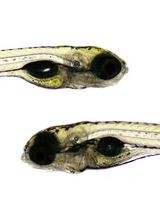
Autonomic regulation of heart and respiratory rates is essential for understanding brain–body interactions in health and disease. Preclinical cardiovascular recordings are often performed under anesthesia or via telemetry, both of which introduce physiological confounds such as stress or impaired recovery due to the need for acute or chronic implantation of sensors. Here, we present a minimally invasive protocol for simultaneous acquisition of high-quality electrocardiography and respiratory signals in awake mice. Using an in-house-modified physiological monitor in awake, head-fixed mice that were briefly habituated to experimental conditions, we ultimately enable stable, long-term physiological recordings alongside in vivo microscopy. This protocol provides a robust, low-stress method for acquiring physiological signals, enabling the simultaneous study of cardiovascular–cerebral dynamics in awake head-fixed mice, thereby enhancing the translational relevance of preclinical measurements.

植物科学

利用高效液相色谱法(HPLC)对拟南芥幼苗中原卟啉酸(Pchlide)的含量进行定量分析

Quantification of Protochlorophyllide (Pchlide) Content in Arabidopsis Seedlings Using a High-Performance Liquid Chromatography (HPLC) System

利用高效液相色谱法(HPLC)对拟南芥幼苗中原卟啉酸(Pchlide)的含量进行定量分析

FZ Fan Zhang
LZ Lingling Zhang
LW Liangsheng Wang
413 Views
Jan 5, 2026
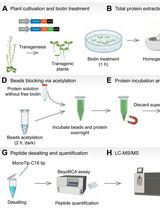
The protochlorophyllide (Pchlide) level is a crucial indicator of plant fitness. Precise quantification of Pchlide content is necessary not only in studies of flu-related mutants that over-accumulate Pchlide in the dark but also for research on plants suffering from environmental stresses. Due to its low content and interference of chlorophylls, quantitative determination of Pchlide content is a challenge. Here, we describe an optimized protocol for Pchlide extraction from Arabidopsis thaliana seedlings and subsequent analysis using high-performance liquid chromatography (HPLC) coupled with fluorescence detection. Divinyl-Protochlorophyllide (DV-Pchlide, the major form of Pchlide in plants) quantification is achieved by interpolating fluorescence peak areas against an experimentally derived standard curve. This protocol provides a reliable workflow for Pchlide quantification, facilitating the deciphering of the underlying mechanism of plant environmental resilience.

干细胞

基于 CRISPR/Cas9 在安全位点敲入的人滋养层干细胞的高效荧光标记方法

Efficient Fluorescent Labeling of Human Trophoblast Stem Cells via a CRISPR/Cas9-Mediated Knock-In Approach in a Safe Harbor Locus

基于 CRISPR/Cas9 在安全位点敲入的人滋养层干细胞的高效荧光标记方法

HZ Hengshan Zhang
JZ Jie Zhou
MO Morgan Orsolini
AZ Anthony Zhao
AT Askar Takhirov
DS Danny J. Schust
103 Views
Jan 5, 2026
Labeling cells with reporter genes allows researchers to visually identify specific cells and observe how they interact with each other in dynamic biological systems. Even though various labeling methods are now available, a specific description of gene knock-in labeling methods for human trophoblast stem cells (hTSCs) has not been reported. Here, we present a streamlined protocol for labeling hTSCs with the green fluorescent protein (GFP) reporter gene via CRISPR/Cas9-mediated knock-in of the gene into the adeno-associated virus site 1 (AAVS1) safe harbor locus. A commonly used hTSC cell line, CT29, was transfected with a dual plasmid system encoding the Cas9 endonuclease and an AAVS1-targeted guide RNA in one plasmid and a donor plasmid encoding a puromycin resistance gene and GFP reporter gene flanked by AAVS1 homology arms. Puromycin-resistant clonal cells were isolated, and AAVS1 integration was confirmed via PCR and sequencing of the PCR products. The labeled cells are proliferative and can give rise to extravillous cytotrophoblast cells (EVT) and the syncytiotrophoblast (ST). To our knowledge, this is the first report using the CRISPR/Cas9 system for AAVS1 integration of a reporter gene in human trophoblast stem cells. It provides an efficient tool to facilitate the study of human trophoblast development and function in co-culture systems and will be highly useful in developing clinical gene therapy-related plasmid constructs.